A legacy system rarely fails in one dramatic moment. It creates friction one exception at a time: a team rekeys data into a spreadsheet, a month-end report needs manual reconciliation, and an integration breaks whenever a vendor updates an interface. Legacy systems modernization services address this operational drag without treating replacement as the only answer. The objective is to create a dependable, scalable operating model around the systems that still matter to the business.
For enterprise leaders, the question is not whether technology is old. The question is whether processes, data, and system architecture can support faster decisions, higher transaction volumes, stronger controls, and new automation requirements. If they cannot, modernization becomes a business priority rather than an IT improvement project.
Why legacy environments become an operational constraint
Most legacy environments were built to solve valid business problems. They often hold critical records, encode decades of process knowledge, and support functions that cannot tolerate downtime. Their weakness is not simply age. It is the accumulation of customizations, disconnected applications, undocumented rules, duplicate data, and manual workarounds that develop as the organization changes.
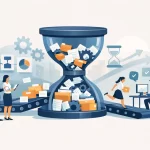
The result is a costly operating model. Employees spend time finding information instead of acting on it. IT teams maintain point-to-point integrations that are difficult to test and expensive to change. Leaders receive reports after the moment to intervene has passed. When automation or AI initiatives begin, they encounter inconsistent inputs and processes that vary by team, country, or business unit.
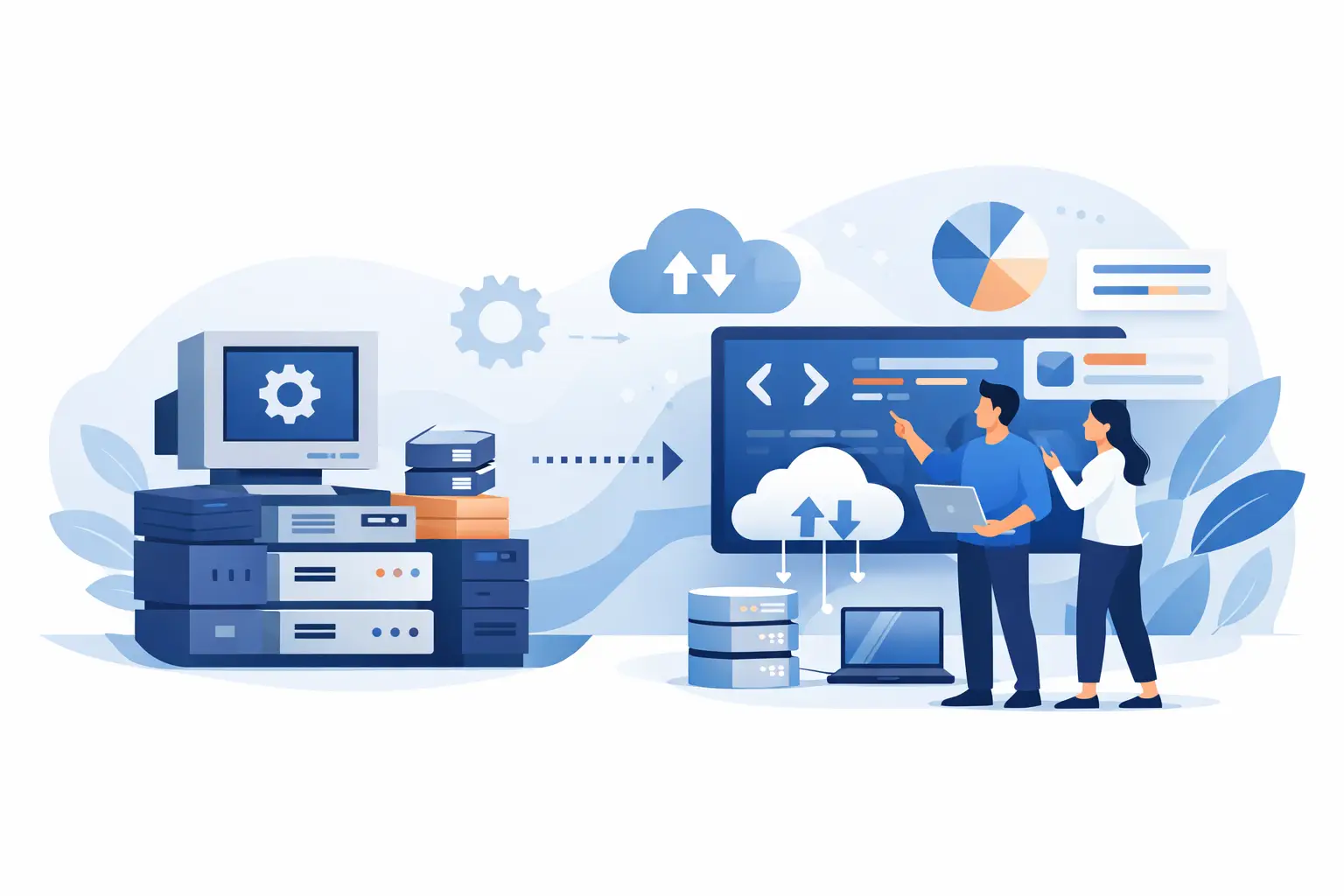
A full replacement can be justified when a core platform no longer meets regulatory, security, or functional requirements. But replacement also carries major cost, change, and delivery risk. In many cases, the better path is targeted modernization: preserve stable capabilities, improve what constrains performance, and build a cleaner foundation for future change.
Legacy systems modernization services should start with operations
Modernization programs often stall because the organization starts with a tool decision. A new workflow platform, data lake, automation suite, or AI assistant may be useful, but none will correct a poorly designed process. Automating unnecessary approvals or extracting data from inconsistent documents only makes an inefficient model run faster.
An effective program begins by identifying the operational outcomes that matter. These may include shorter order-to-cash cycles, fewer invoice exceptions, lower service response times, improved planning accuracy, or real-time visibility into production and supply-chain performance. The modernization scope should then be designed around the processes and decisions that directly affect those outcomes.
This changes the conversation from “Which system should we replace?” to “Where does operational performance break down, and what must change to remove the constraint?” It also creates clearer investment logic. A modernization initiative should have measurable baseline performance, defined owners, and an agreed way to track improvement after deployment.
Map the process before changing the platform
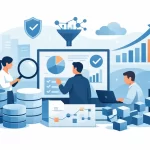
Process discovery needs to go beyond workshops and flowcharts. Teams should examine actual transaction paths, exception rates, handoffs, rework, approval delays, and local variations. Process mining and task analysis can help reveal the difference between the documented workflow and the work employees perform every day.
This evidence is especially valuable in shared services and high-volume operations. An accounts payable process may look standardized until data shows that a small number of supplier formats or purchase-order exceptions create most manual effort. A service process may appear to need more staffing when the real issue is incomplete master data at case creation.
With this visibility, modernization teams can simplify rules before digitizing them. They can also decide where a legacy application remains the system of record, where an integration layer is sufficient, and where an outdated component needs to be retired.
Treat data as part of the operating model
Clean data is not a technical cleanup task to defer until later. It is a prerequisite for reliable automation, analytics, and AI. If customer, product, supplier, or asset records are fragmented across systems, every workflow inherits uncertainty. Teams compensate through manual checks, while dashboards produce conflicting answers.
A modernization plan should establish ownership for critical data domains, clear quality rules, and a practical architecture for sharing data across applications. That does not always require a large central data program. It does require agreement on which data is authoritative, how it is updated, and how changes are governed.
The architecture should also support timely access to operational information. For example, a finance leader should not need to wait for a monthly consolidation cycle to understand the drivers of disputes or overdue receivables. A production manager should be able to see exceptions as they develop, not after a shift ends. Real-time or near-real-time visibility turns modernization into an operational management capability.
A disciplined modernization approach reduces delivery risk
The strongest programs sequence change. They do not attempt to redesign every process, migrate every data set, and deploy every new technology in a single release. Large transformations still need an enterprise vision, but execution should proceed through controlled, value-focused increments.
A practical approach has four connected stages:
- Assess the current environment. Establish the process baseline, application dependencies, data quality issues, security requirements, technical debt, and business risk of doing nothing.
- Design the target operating model. Define future workflows, decision rights, data standards, integration patterns, automation opportunities, and the metrics that will demonstrate value.
- Modernize in priority waves. Deliver high-impact capabilities first, such as digital intake, workflow orchestration, API-based integration, intelligent document processing, or operational dashboards.
- Operate and improve. Monitor adoption, exception patterns, automation performance, data quality, and business results. Modernization is sustained through governance and continuous improvement, not a final project handoff.
The priorities will vary. A manufacturer may need to connect shop-floor, quality, and planning data before applying predictive analytics. A healthcare organization may need stronger interoperability and access controls before redesigning patient-administration workflows. A trade business may gain immediate value by automating order exceptions and creating reliable inventory visibility. The method remains consistent: improve the process, organize the data, then scale technology around both.
Where automation and AI create value
Automation is most effective when it is connected to redesigned workflows and governed data. In stable, rules-based processes, robotic process automation can reduce repetitive data entry and accelerate execution across legacy interfaces. Where documents, emails, or unstructured requests drive work, intelligent document processing can classify information, extract relevant fields, and route cases to the right workflow.
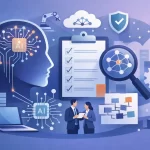
AI and GenAI have a different role. They can support knowledge retrieval, draft responses, summarize cases, assist with classification, and help employees navigate complex procedures. They should not be positioned as a substitute for process ownership or data discipline. A GenAI assistant connected to incomplete data or ambiguous policies can spread errors faster than a manual process.
The right use case depends on decision risk. Low-risk, high-volume tasks are often good candidates for assisted automation. Decisions involving compliance, customer commitments, financial posting, or safety typically require stronger controls, confidence thresholds, audit trails, and human review. Enterprise value comes from combining speed with governance.
How to evaluate a modernization partner
Many organizations have accumulated separate providers for strategy, integration, automation, data, and support. This can create fragmented accountability: each vendor delivers its component, but no one owns the end-to-end business result. For modernization, that model frequently adds coordination cost and slows decisions.
A capable partner should connect process redesign, data architecture, custom development, automation, AI, and ongoing support within one execution model. The partner should also be able to work with existing enterprise platforms rather than forcing a wholesale technology reset. Experience in complex environments matters because modernization requires careful management of integrations, controls, adoption, and operational continuity.
Ask for evidence of how the provider measures outcomes. Technical activity is not the same as business impact. Useful measures include transaction touch time, straight-through processing rates, exception volume, cycle time, service levels, data-quality improvement, and cost per transaction. A delivery plan should show how these measures will be baselined and reviewed after each release.
Ective approaches modernization as an integrated transformation effort, bringing process improvement, data management, automation, and AI together so enterprises can improve performance without creating another disconnected technology layer.
Build for change, not just for migration
A successful modernization program leaves the organization better able to adapt. That means reducing dependence on fragile custom code, replacing manual handoffs with managed workflows, exposing reusable services through well-governed integrations, and making operational data visible to the people responsible for outcomes.
It also means being selective. Not every legacy component needs immediate replacement, and not every process needs AI. The best investment is the one that removes a meaningful operational constraint while creating options for the next improvement. Start where the cost of friction is visible, establish measurable control, and use each delivered capability to make the next change easier.