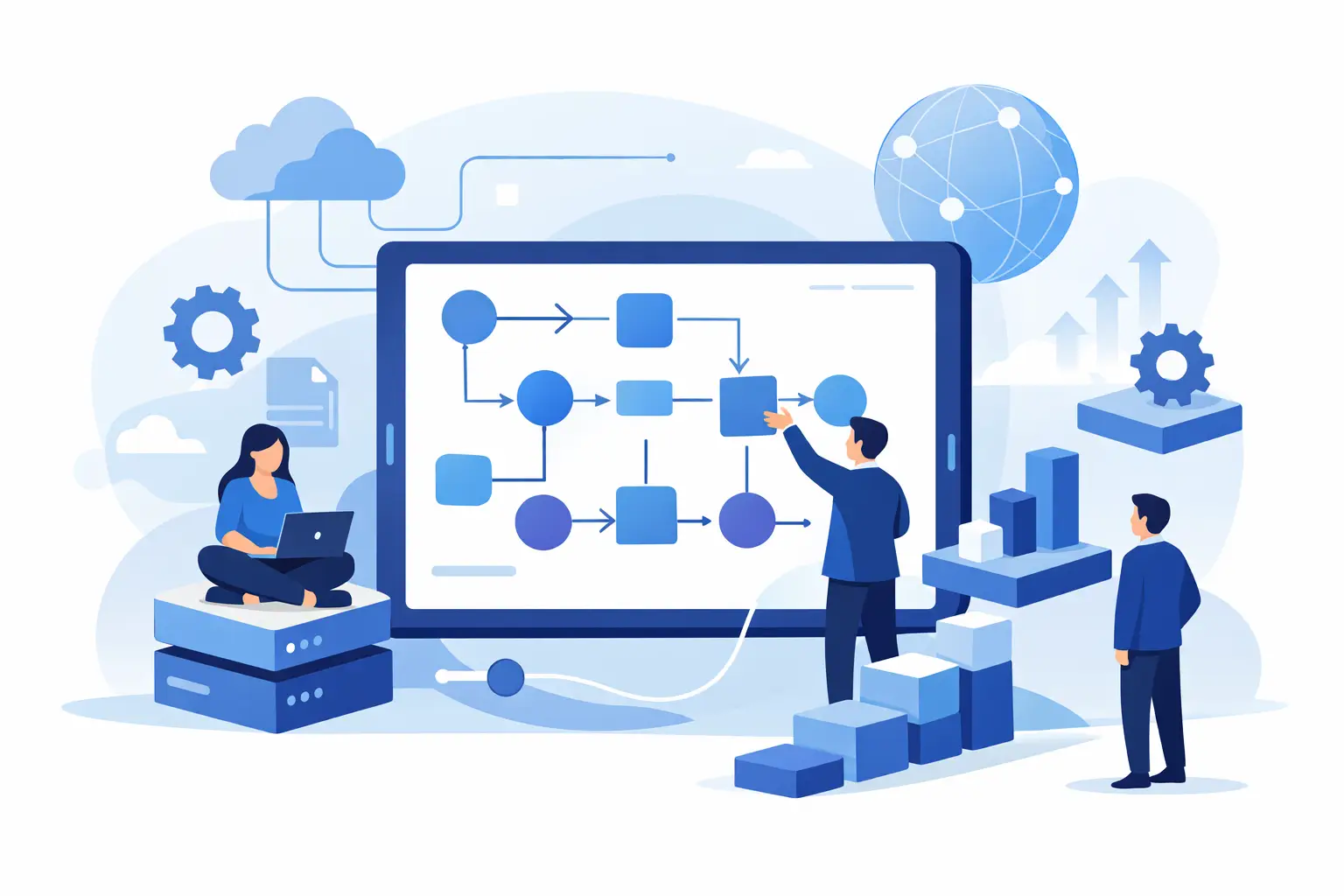
Tím zdieľaných služieb by nemal potrebovať e-mailové schránky, tabuľky a manuálne kontroly stavu, aby zistil, v akom stave sa nachádza faktúra, objednávka, reklamácia alebo požiadavka na službu. Napriek tomu je to stále operačný model, ktorý stojí za mnohými drahými podnikovými procesmi. Služby digitalizácie pracovných postupov nahrádzajú túto neistotu organizovanou prácou, prepojenými údajmi, automatizovanými rozhodnutiami a prehľadom v reálnom čase.
Na tomto rozdiele záleží. Digitalizácia papierového formulára alebo pridanie automatizačného bota k jednej úlohe môže znížiť lokálne úsilie, ale zriedkakedy opraví proces, ktorý toto úsilie vytvoril. Podniková hodnota vyplýva z prepracovania komplexného pracovného postupu: ako práca vstupuje, ako sa overuje, kto je vlastníkom každého rozhodnutia, ktoré systémy poskytujú údaje a ako sa riešia výnimky.
Čo by mali priniesť služby digitalizácie pracovných postupov
Pracovný postup je viac než len postupnosť schválení. Je to prevádzková logika, ktorá presúva prácu medzi ľuďmi, systémami, obchodnými jednotkami a kontrolnými mechanizmami. Napríklad v procese od objednávky po preplatenie môže zahŕňať nástup zákazníka, kontrolu úverovej bonity, zadávanie objednávok, plnenie, fakturáciu, riešenie sporov a reportovanie. Slabosť v ktoromkoľvek bode môže viesť k následnému prepracovaniu.
Efektívne služby digitalizácie pracovných postupov sa zameriavajú na celý operačný model, a nie len na konverziu manuálnych krokov na digitálne. Očakávaným výsledkom je proces, ktorý sa ľahšie vykonáva, riadi, meria a vylepšuje vo veľkom.
To si vyžaduje štyri prepojené funkcie. Po prvé, tímy potrebujú zlepšenie procesov , aby sa odstránili zbytočné odovzdávania úloh, duplicitné záznamy, nejasné vlastníctvo a schválenia, ktoré nepridávajú kontrolu. Po druhé, potrebujú spoľahlivé dátové štruktúry a integrácie, aby zamestnanci a automatizácie nepracovali s konfliktnými záznamami. Po tretie, potrebujú automatizáciu a umelú inteligenciu aplikovanú na dobre definované úlohy a rozhodnutia. Nakoniec potrebujú dashboardy, ktoré v reálnom čase zobrazujú priepustnosť, starnutie, výnimky, súlad a výkonnosť služieb.
Keď jeden z týchto prvkov chýba, program nesie riziko. Automatizácia pri chybných údajoch môže chyby odstraňovať rýchlejšie. Dashboard bez zodpovednosti za proces sa stáva skôr vrstvou reportovania než nástrojom riadenia. Redizajn procesu bez technického dodania môže zostať výsledkom workshopu namiesto prevádzkovej zmeny.
Začnite s pracovným postupom, nie s technológiou
Výber technológie je nevyhnutný, ale nemal by byť východiskovým bodom. Prvou otázkou nie je, či nasadiť robotickú automatizáciu procesov, inteligentné spracovanie dokumentov, platformu pracovných postupov alebo generatívnu umelú inteligenciu. Prvou otázkou je, prečo práca trvá tak dlho a kde sa stráca hodnota.
Štruktúrované hodnotenie by malo mapovať aktuálny pracovný postup od spúšťača až po výsledok. Malo by identifikovať objemy, časy cyklov, kontaktné body, použité systémy, kategórie výnimiek, požiadavky na kontrolu a náklady na oneskorenie. Dolovanie procesov a analýza úloh môžu pridať dôkazy, najmä ak sa zdokumentované postupy líšia od skutočného vykonania.
Najužitočnejšie zistenia sú často základné, ale závažné. Tím môže zistiť, že 70 percent prípadov prebieha štandardným spôsobom, zatiaľ čo malý počet výnimiek zaberá väčšinu času zamestnancov. Alebo môže zistiť, že povinné schválenie sa vykonáva po bode, v ktorom sa riziku dalo predísť. Tieto poznatky formujú lepší návrh budúceho stavu.
Cieľový pracovný postup by mal definovať, ktoré rozhodnutia je možné automatizovať, ktoré vyžadujú ľudský úsudok a aké informácie musia byť k dispozícii v každej fáze. Mal by tiež stanoviť jasnú cestu k výnimkám. Priame spracovanie je cenné, ale iba ak sú výnimky smerované k správnej osobe s kontextom potrebným na ich rýchle vyriešenie.
Vybudujte dátovú základňu, ktorá podporuje vykonávanie
Fragmentované dáta sú jednou z najtrvalejších bariér škálovateľnej digitalizácie. Informácie o zákazníkoch môžu byť uložené v platforme CRM, údaje o transakciách v ERP, dokumenty v úložisku súborov a prevádzkový stav v jednotlivých schránkach. Zamestnanci to kompenzujú vyhľadávaním, kopírovaním a zosúlaďovaním. Automatizácia zdedí rovnakú fragmentáciu, pokiaľ sa nezmení architektúra.
Praktická dátová základňa nevyžaduje nahradenie každého staršieho systému. Vyžaduje si definovanie autoritatívnych zdrojov, prepojenie systémov, ktoré sa podieľajú na pracovnom postupe, a stanovenie pravidiel pre kvalitu údajov, prístup k nim a ich uchovávanie. Cieľom je poskytnúť každému používateľovi a automatizácii správne údaje v danom okamihu práce.
Toto je obzvlášť dôležité pre procesy s veľkým množstvom dokumentov. Umelá inteligencia dokáže klasifikovať dokumenty, extrahovať polia, porovnávať informácie s obchodnými záznamami a smerovať prípady na základe úrovne spoľahlivosti. Výstup však stále vyžaduje overovacie pravidlá, audítorské záznamy a vlastníctvo pre opravy údajov. Umelá inteligencia je najefektívnejšia, keď je integrovaná do riadeného pracovného postupu a nie je nasadená ako samostatný experiment.
V prípade regulovaných alebo citlivých procesov musí byť riadenie navrhnuté od samého začiatku. To zahŕňa prístup založený na rolách, oddelenie povinností, schvaľovacie dôkazy, pôvod údajov, požiadavky na uchovávanie a monitorovanie automatizovaných rozhodnutí. Rýchlosť bez kontroly vytvára prevádzkovú záťaž, nie transformačný výsledok.
Automatizujte správnu prácu v správnom rozsahu
Nie každá manuálna činnosť by mala byť automatizovaná. Niektoré úlohy sa vyskytujú príliš zriedkavo na to, aby sa ospravedlnil vývoj na mieru. Iné vyžadujú vyjednávanie, kontextové posudzovanie alebo riadenie vzťahov, ktoré by malo zostať riadené človekom. Najsilnejšie obchodné prípady zvyčajne kombinujú vysoký objem transakcií, opakovateľné pravidlá, stabilné vstupné údaje a merateľný vplyv na služby alebo finančný dopad.
Medzi bežných kandidátov patrí spracovanie faktúr, údržba kmeňových údajov, nástup zákazníkov, správa objednávok, požiadavky na obstarávanie, prijímanie reklamácií, zosúladenie a pracovné postupy pre zamestnancov. V rámci každého procesu nie je cieľom nevyhnutne úplná automatizácia. Lepším cieľom môže byť 80-percentné priame spracovanie s rýchlou a dobre riadenou trasou pre zvyšných 20 percent.
Technologický mix závisí od pracovného postupu. Integrácia a orchestrácia založená na API sú často výhodnejšie tam, kde ich systémy podporujú. Platformy pracovných postupov dokážu koordinovať úlohy, schvaľovania, dohody o úrovni služieb a správu prípadov. Robotická automatizácia môže byť vhodná pre stabilné staršie rozhrania. Inteligencia dokumentov dokáže premeniť neštruktúrované vstupy na použiteľné dáta, zatiaľ čo asistenti umelej inteligencie môžu pomôcť zamestnancom zhrnúť prípady, načítať politiky alebo navrhnúť odpovede.
Kompromisom je údržba. Riešenie postavené na krehkej automatizácii založenej na obrazovkách môže priniesť rýchle zisky, ale vyžaduje si väčšiu podporu pri zmene základných systémov. Zavedenie integrovanejšej architektúry môže trvať dlhšie, no zvyčajne ponúka lepšiu škálovateľnosť a nižšiu dlhodobú prevádzkovú záťaž. Správne rozhodnutie závisí od naliehavosti podnikania, systémových obmedzení, stability procesov a plánu pre základné platformy.
Merajte výsledky, nie automatizovanú aktivitu
Program by sa nemal posudzovať podľa počtu nasadených botov, digitalizovaných pracovných postupov alebo spracovaných dokumentov. Tieto metriky ukazujú aktivitu. Vedenie potrebuje dôkazy o výkonnosti podniku.
Pre vedúcich prevádzky medzi relevantné ukazovatele často patrí čas cyklu, miera vybavenia správnych požiadaviek na prvýkrát, vek nevybavených zákaziek, priepustnosť na zamestnanca, miera výnimiek a dosiahnutie úrovne služieb. Vedúci finančníci sa môžu zamerať na náklady na transakciu, vplyv na prevádzkový kapitál, únik príjmov a ušetrené externé náklady na spracovanie. Vedúci IT potrebujú prehľad o dostupnosti, dopyte po podpore, úsilí o zmenu a dodržiavaní predpisov.
Pred implementáciou si stanovte základ týchto opatrení a po spustení ich monitorujte. To vytvára zodpovednosť a odhaľuje, či riešenie presúva prácu, a nie ju eliminuje. Napríklad rýchlejší proces príjmu má obmedzenú hodnotu, ak sa nevyriešené výnimky hromadia v inom rade.
Dashboardy v reálnom čase by mali slúžiť aj vlastníkom procesov, nielen reportovaniu projektov. Užitočný dashboard odhaľuje, kde sa práca oneskoruje, prečo dochádza k výnimkám, ktoré obchodné jednotky vytvárajú dopyt a či klesá dôvera v automatizáciu. To vytvára cyklus neustáleho zlepšovania namiesto toho, aby sa spustenie prevádzky považovalo za cieľovú čiaru.
Ako zabezpečiť udržateľnosť digitalizácie
Veľké transformačné programy zlyhávajú, keď sa vlastníctvo rozdrobí medzi obchodné tímy, IT a viacerých špecializovaných dodávateľov. Podnik vlastní výsledky, IT architektúru a bezpečnosť a prevádzkové tímy rozumejú každodenným výnimkám. Tieto perspektívy musia byť koordinované prostredníctvom jedného modelu realizácie.
Postupný plán je zvyčajne efektívnejší ako snaha transformovať každý pracovný postup naraz. Začnite s procesom, ktorý má objem materiálu, jasné problémové body, dostupné údaje a angažovaného vlastníka. Dosiahnite merateľný výsledok, štandardizujte prístup k realizácii a potom rozšírte procesy do susedných procesov. Buduje sa tým organizačná dôvera a zároveň sa posilňujú spoločné schopnosti, ako sú integračné vzorce, riadenie údajov, monitorovanie automatizácie a riadenie zmien.
Riadenie zmien by malo byť skôr operačné ako ceremoniálne. Zamestnanci potrebujú jasno v tom, čo sa zmení v ich každodennej práci, kde sa teraz vyskytujú rozhodnutia, ako sa riešia výnimky a ako sa bude hodnotiť výkon. Ich skúsenosti sú tiež dôležité počas návrhu. Ľudia, ktorí riešia výnimky, často vedia, ktoré pravidlá sú neúplné a ktorým dátovým poliam nemožno dôverovať.
Spoločnosť Ective pristupuje k digitalizácii pracovných postupov ako k integrovanej disciplíne: optimalizuje proces, organizuje dáta, implementuje správnu automatizáciu a zviditeľňuje výkon. Tým sa vyhýba známemu vzoru izolovaných nástrojov, ktoré riešia jeden lokálny problém a zároveň zvyšujú komplexnosť celého podniku.
Najlepším ďalším krokom je vybrať si jeden pracovný postup s vysokou hodnotou a poctivo ho preskúmať. Sledujte prácu od požiadavky až po riešenie, kvantifikujte nedostatky, identifikujte medzery v údajoch a definujte výsledok, ktorý by bol pre podnikanie dôležitý. Tam začína škálovateľný program digitalizácie.