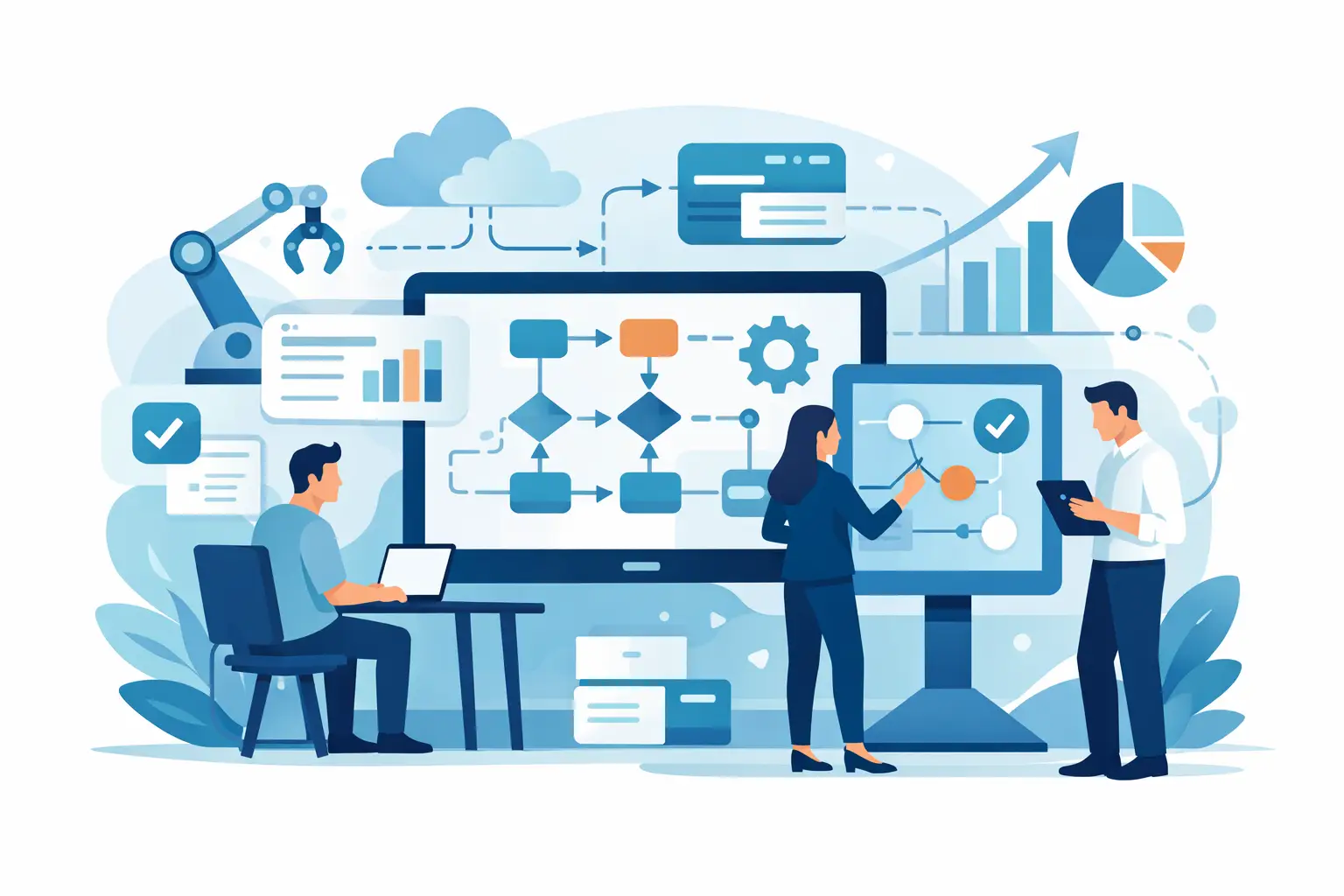
Ručná práca zvonku zriedka pôsobí dramaticky. Prejavuje sa v podobe schvaľovacích front, ktoré sa ťahajú celé dni, tímov, ktoré znova zadávajú tie isté údaje do viacerých systémov, a vedúcich pracovníkov, ktorí prijímajú rozhodnutia na základe správ, ktoré sú už neaktuálne. Práve tu sa zvyčajne vynára skutočná otázka: ako modernizovať podnikové pracovné postupy bez toho, aby sa pridávali ďalšie nástroje, ďalší dodávatelia a zvyšovala sa zložitosť.
Pre väčšinu podnikov nie je problémom nedostatok technológií. Problémom je skôr to, že procesy, údaje a systémy sa vyvíjali izolovane. Pracovný postup môže pred svojím dokončením prejsť cez ERP, e-mail, tabuľkové kalkulátory, zdieľané disky a odvetvové aplikácie. Každé odovzdanie spôsobuje oneskorenie, riziko a náklady. Modernizácia funguje vtedy, keď sa tieto odovzdania prepracujú, údaje sú správne štruktúrované a automatizácia sa uplatňuje tam, kde je možné ju škálovať.
Čo vlastne znamená modernizácia podnikových pracovných postupov
Keď vedúci pracovníci diskutujú o modernizácii, rozhovor sa často hneď presúva na automatizačný softvér alebo príklady využitia umelej inteligencie. Je to pochopiteľné, ale práve v tomto bode mnohé programy strácajú dynamiku. Nefunkčný proces automatizovaný vo veľkom meradle je stále nefunkčným procesom, len rýchlejším a ťažšie udržiavateľným.
Modernizácia pracovných postupov znamená prehodnotiť spôsob, akým práca prebieha v rámci celej spoločnosti. Zahŕňa to to, kto vykonáva jednotlivé kroky, ktoré rozhodnutia sa prijímajú na základe pravidiel, kde sa údaje vkladajú do procesu, ako si systémy vymieňajú informácie a ako sa meria výkonnosť. V praxi nie je cieľom digitalizovať každú úlohu. Cieľom je vytvoriť pracovné postupy, ktoré sú jednoduchšie, rýchlejšie, ľahšie riaditeľné a schopné zvládnuť väčšie objemy práce bez úmerného zvyšovania počtu zamestnancov.
Pre vedúcich prevádzky to zvyčajne znamená zníženie počtu výnimiek, skrátenie dĺžky cyklov a zníženie manuálnej práce. Pre vedúcich v oblasti IT a transformácie to znamená vytvorenie architektúry, ktorá nie je závislá od jednorazových skriptov, nestabilných integrácií ani nesúvisiacich automatizačných projektov. Pre tímy v oblasti financií a controllingu to znamená lepší prehľad o priepustnosti, nákladoch a výkonnosti služieb.
Prečo sa podnikové programy na riadenie pracovných postupov zasekávajú
Najčastejším dôvodom, prečo modernizácia uviazne na mŕtvom bode, je to, že organizácie ju vnímajú ako zavádzanie nových nástrojov namiesto zmeny prevádzkového modelu. Nakupujú softvér na riadenie pracovných postupov, riešenia pre robotizáciu procesov alebo funkcie umelej inteligencie ešte predtým, ako definujú budúci stav procesov. V dôsledku toho technológia len prekrýva existujúce neefektívnosti namiesto toho, aby ich odstránila.
Ďalším problémom je roztrieštenosť zodpovednosti. Prevádzkové oddelenie zodpovedá za procesy, IT za systémy, tímy zodpovedné za údaje za vykazovanie a tímy zodpovedné za automatizáciu za boty. Každá skupina síce môže vylepšiť svoju časť, ale nikto nenesie zodpovednosť za celkový tok procesov. To vedie k lokálnej optimalizácii a k treniciam v rámci celej spoločnosti.
Ďalším praktickým obmedzením je kvalita údajov. Ak sú základné údaje nekonzistentné, dokumenty nestruktúrované a obchodné pravidlá sa líšia v závislosti od tímu alebo lokality, je zavedenie automatizácie nákladné a jej prevádzka nespoľahlivá. Preto sa v rámci dôkladných modernizačných programov venuje pozornosť procesnej logike a dátovým základom ešte pred rozšírením automatizácie.
Existuje tu aj kompromis, ktorý mnohé spoločnosti podceňujú. Najrýchlejšia cesta nie je vždy tou najškálovateľnejšou. Rýchle riešenie môže priniesť počiatočné úspechy, ale ak vedie k nárastu technického dlhu alebo obchádza riadiace mechanizmy, môže neskôr spomaliť celý program. Modernizácia podniku si vyžaduje tempo, ktoré prináša hodnotu už v počiatočnej fáze, bez toho, aby vytváralo záťaž spojenú s údržbou, ktorá sa každé štvrťročné obdobie zvyšuje.
Ako modernizovať podnikové pracovné postupy v správnom poradí
Dôležitý je správny postup. Podniky, ktoré úspešne modernizujú, zvyčajne postupujú disciplinovane, namiesto toho, aby spúšťali izolované iniciatívy.
1. Začnite s analýzou pracovných postupov, nie s výberom softvéru
Pred výberom platforiem zistite, kde vaša firma skutočne stráca čas a peniaze. Zamerajte sa na rozsiahle medzioddelové pracovné toky, ako je spracovanie objednávok, spracovanie faktúr, registrácia nových zákazníkov, servisné požiadavky, obstarávanie, reklamácie alebo podpora plánovania výroby. Práve v týchto oblastiach sa zvyčajne najjasnejšie prejavuje kombinácia manuálnej práce, riešenia výnimiek a nedostatočnej prehľadnosti.
Súčasťou dôkladnej analýzy by malo byť zmapovanie aktuálneho toku práce medzi tímami a systémami, zmeranie základnej výkonnosti a identifikácia skutočných príčin oneskorenia. V niektorých prípadoch je problémom úzkoprofilové obmedzenie vyplývajúce z politík. V iných prípadoch ide o duplicitné zadávanie údajov, chýbajúcu integráciu, nedostatočné spracovanie dokumentov alebo nejasné rozhodovacie pravidlá. Ide o to odlíšiť symptómy od štrukturálnych príčin.
2. Pred automatizáciou procesu ho prepracujte
Práve v tejto oblasti mnohé programy buď vytvárajú pridanú hodnotu, alebo zbytočne míňajú rozpočet. Prepracovanie znamená spochybňovanie zbytočných schvaľovacích postupov, zníženie počtu odovzdávaní úloh, štandardizáciu rozhodovacej logiky a vyjasnenie zodpovednosti. Ak má proces desať variácií, pretože každá obchodná jednotka pracuje inak, vynútenie automatizácie na takúto zložitosť bude nákladné.
Štandardizácia neznamená ignorovanie podnikateľskej reality. Niektoré odchýlky sú odôvodnené právnymi predpismi, požiadavkami zákazníkov alebo štruktúrou trhu. Mnohé z nich však vznikli preto, že sa tímy prispôsobili obmedzeniam systému alebo historickým výnimkám. Modernizácia by mala zachovať to, čo je nevyhnutné, a odstrániť to, čo je len dedičstvom minulosti.
3. Vytvorte spoľahlivý dátový základ
Výkonnosť pracovných postupov závisí od kvality údajov viac, než sa vo väčšine obchodných prípadov automatizácie pripúšťa. Ak sú záznamy o zákazníkoch, údaje o produktoch, finančné dimenzie alebo informácie o dodávateľoch neúplné alebo nekonzistentné, zníži sa spoľahlivosť smerovania, validácie, vykazovania aj rozhodnutí založených na umelej inteligencii.
Táto fáza často zahŕňa vymedzenie vlastníctva podnikových údajov, čistenie kľúčových kmeňových údajov, štruktúrovanie neusporiadaných vstupných údajov a stanovenie pravidiel pre vytváranie a údržbu údajov. Je menej viditeľná ako spustenie novej automatizačnej vrstvy, má však väčší dlhodobý prínos. Čisté údaje znižujú počet výnimiek, zlepšujú priebežné spracovanie a prispievajú k lepšiemu prehľadu o prevádzke.
4. Využívajte automatizáciu tam, kde je možné ju škálovať
Akonáhle sa proces zjednoduší a údaje budú použiteľné, automatizácia sa stane oveľa efektívnejšou. Môže to zahŕňať koordináciu pracovných postupov, integráciu systémov, spracovanie dokumentov, automatizáciu založenú na pravidlách a podporu umelej inteligencie pri klasifikácii, extrakcii alebo pri rozhodovaní.
Kľúčom je prispôsobiť metódu danému procesu. Vysoko repetitívne a stabilné úlohy sú ideálnymi kandidátmi na automatizáciu. Procesy s veľkým objemom čiastočne štruktúrovaných vstupných údajov môžu ťažiť z inteligentného spracovania dokumentov a modelov umelej inteligencie. Pracovné toky s mnohými prechodmi medzi systémami môžu potrebovať skôr lepšiu koordináciu a integráciu než roboty.
Závisí to aj od stupňa vyspelosti procesu. Ak sa pracovný postup mení každý mesiac, rozsiahla automatizácia nemusí byť zatiaľ tou správnou investíciou. V takýchto prípadoch môžu najskôr priniesť lepšie výsledky štandardizácia a riadenie.
5. Merajte výsledky v reálnom čase
Moderný pracovný postup nekončí jeho spustením do prevádzky. Je potrebný prehľad o výkone, ktorý zobrazuje priepustnosť, dĺžku cyklu, počet nevybavených úloh, mieru výnimiek, mieru bezkontaktného spracovania a vplyv na podnikanie. Bez toho vedúci pracovníci riadia na základe neoficiálnych informácií.
Dashboardy v reálnom čase a systémy merania prevádzky pomáhajú tímom rýchlo identifikovať úzke miesta a neustále sa zlepšovať. Zmenia tiež kvalitu rozhovorov na vedúcich pozíciách. Namiesto toho, aby sa pýtali, či transformačný program vo všeobecnosti funguje, môžu vedúci pracovníci vidieť, ktoré pracovné postupy sa zlepšujú, kde dochádza k obmedzeniu kapacity a kde je potrebná ďalšia úprava.
Aké miesto zaujíma umelá inteligencia v modernizácii pracovných postupov
Umelá inteligencia má svoje opodstatnené miesto v podnikových pracovných postupoch, mala by sa však používať disciplinovane. Funguje dobre, keď podporuje konkrétne prevádzkové úlohy, ako je extrakcia údajov z dokumentov, kategorizácia požiadaviek, odporúčanie ďalších krokov alebo poskytovanie kontextových informácií používateľom. Menej efektívna je v prípade, ak sa nasadí ako nejasná vrstva nad chaotickými procesmi a nekonzistentnými údajmi.
Najúčinnejšie príklady využitia umelej inteligencie vychádzajú z jasných výsledkov pracovných postupov. Ide napríklad o skrátenie času potrebného na spracovanie faktúr, zvýšenie presnosti smerovania prípadov alebo zvýšenie miery riešenia prostredníctvom samoobsluhy. V každom prípade by umelá inteligencia mala fungovať v rámci kontrolovaného procesu s definovanými postupmi eskalácie, merateľnými výstupmi a v prípade potreby pod ľudským dohľadom.
To je obzvlášť dôležité v regulovaných prostrediach alebo prostrediach s vysokým rizikom. Presnosť, vysvetliteľnosť a riadenie sú rovnako dôležité ako rýchlosť. Podniky by sa nemali pýtať, kde je možné umelú inteligenciu zaviesť. Mali by sa skôr pýtať, kde môže zlepšiť výkonnosť procesov bez oslabenia kontroly.
Ako vyzerá kvalitná modernizácia vo veľkom meradle
V širšom meradle nie sú modernizované pracovné postupy len rýchlejšie. Dajú sa ľahšie spravovať a rozširovať. Tímy vedia, kde sa práca nachádza, čo mešká a prečo. Dáta sa konzistentne prenášajú medzi systémami. Výnimky sa identifikujú včas. Nové objemy obchodných činností je možné zvládnuť s menšou prevádzkovou záťažou.
To zároveň mení ekonomiku transformácie. Namiesto financovania samostatných projektov zameraných na zlepšovanie procesov, automatizáciu, vykazovanie a umelú inteligenciu môžu podniky vytvoriť jediný modernizačný model, ktorý ich spája. Práve tu sa ukazuje hodnota integrovaného partnerského prístupu. Pozícia spoločnosti Ective ako komplexného poskytovateľa odráža praktickú skutočnosť: podniky dosahujú lepšie výsledky, keď sa prepracovanie procesov, dátová architektúra, digitalizácia, inteligentná automatizácia a meranie realizujú ako jeden program, a nie ako nesúvisiace pracovné toky.
Merateľné výsledky sa líšia v závislosti od funkcie, ale základný vzorec zostáva rovnaký. Nižšie náklady na spracovanie, kratšie cykly, menej ručných zásahov, lepšie dodržiavanie predpisov a väčšia prehľadnosť pre rozhodovateľov. Tieto prínosy nevznikajú len vďaka technológii. Vychádzajú z disciplinovaného vykonávania v rámci procesov, údajov a automatizácie.
Ako sa rozhodnúť, kde začať
Najlepší východiskový bod zvyčajne nie je ten najviditeľnejší pracovný postup. Je to ten, v ktorom sa stretávajú zložitosť, objem a vplyv na podnikanie. Môže to byť napríklad spracovanie záväzkov v prostredí zdieľaných služieb, vybavovanie servisných objednávok v priemyselnom podniku alebo zapájanie nových zákazníkov v prísne regulovanom odvetví. Začnite tam, kde sú oneskorenia merateľné, kde je silná podpora zo strany vedenia a kde je možné úspech zopakovať.
Na tomto základe vytvorte model, ktorý je možné opakovať. Stanovte, ako sa pracovné postupy hodnotia, prepracúvajú, automatizujú a merajú. Vytvorte štandardy pre riadenie a architektúru. To organizácii umožní rozširovať modernizáciu bez toho, aby musela zakaždým vymýšľať nový prístup.
Podniky, ktoré dosahujú trvalý pokrok, nie sú tie, ktoré sa naháňajú za najnovšími nástrojmi. Sú to tie, ktoré sú ochotné zjednodušiť spôsob vykonávania práce, vyčistiť údaje, na ktorých je táto práca založená, a riadiť modernizáciu pracovných postupov ako disciplínu zameranú na vykonávanie. Práve v tom sa dynamika premieňa na prevádzkovú výhodu.